
Vol. 31 No. 340 (2026)
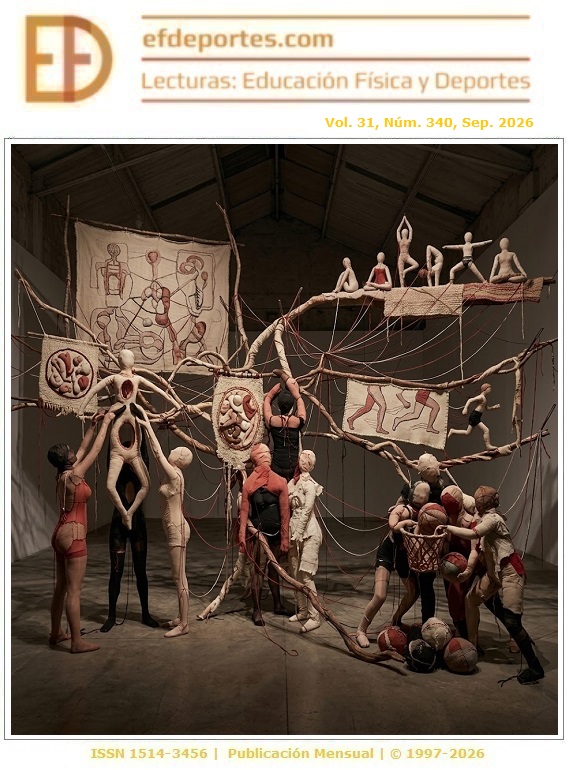
Embodiments, Narratives, and Emancipation
This issue invites to explore physical education, sport, and physical activity not only as bodily practices, but also as living narratives and territories of political struggle. This edition presents the monograph Narrative Research in Physical Activity and Sport, which originated from the postgraduate seminar taught by Dr. David Beer at the National University of Mar del Plata. Through biographical-narrative research, the work assumes the ethical commitment to dismantle the institutional framework, humanize pedagogy, and conceive of the body as a territory of resistance.
Paula Andrea Vélez Castañeda analyzes the incorporation of yoga and emotional well-being in the school setting as strategies for protecting life and promoting education situated in interdependence; Mariana Flores explores the transformation of relationships when secondary school classes are held at the beach; Gabriel Mariano Altamiranda champions the reappropriation of public space through "wild soccer" in the neighborhood square during the 1990s. Estefanía Lourdes Gisele Ferreira addresses resilience and identity reconstruction following physical mutilation in motorsports (Alex Zanardi and Billy Monger); Julieta Goyena examines the tension surrounding gender mandates through the experiences of female soccer players in the schoolyard; and Raúl Oscar Martínez analyzes the overcoming of trauma and identity in Cala, the daughter of a repressor from the dictatorship, through sport. Finally, Leila Ángela Kafer proposes Biodance to conceive of the body as an epistemic unit, and María Florencia Barbella advocates for aukantüm com (playing in community) in the face of the commodification of the body.
Throughout the compilation, the authors examine power structures inscribed on the flesh, gender dynamics, trauma, communal play, and care. Taken together, this monograph reaffirms that investigating bodies through their own narratives is not only a methodological choice, but also a political act of reparation, memory, and pedagogical emancipation.
Lic. Tulio Guterman, Director – September 2026
Published:
2026-09-01