
Vol. 31 No. 337 (2026)
Millions on the Field, Pennies on the Table
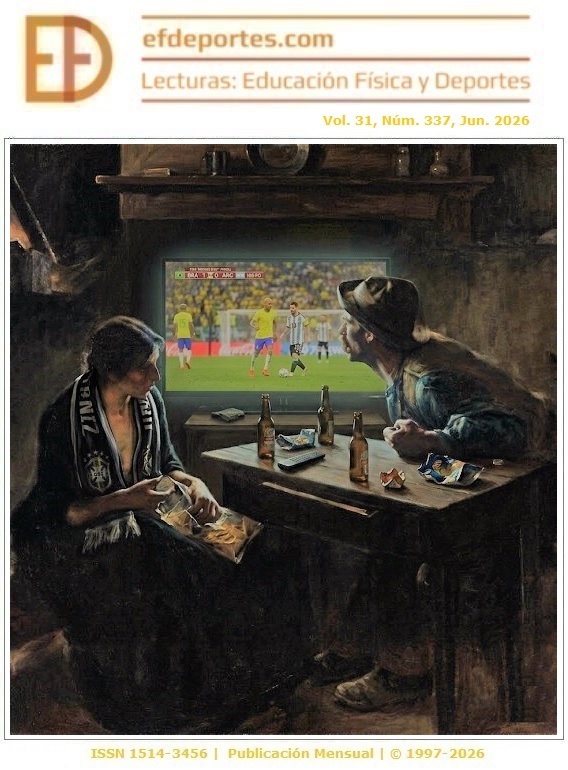
A powerful satirical image on our cover merges the traditional chiaroscuro of a classic painting with the stark immediacy of contemporary screens. At a humble wooden table, worn by years of use, a couple watches a television broadcast of a classic South American match. The vibrant colors of the pitch and the uniforms of the stars-whose salaries and annual bonuses defy any macroeconomic logic-contrast sharply with the gloom of a home where the main course of the evening is reduced to a few bags of snacks and some bottles of beer.
This visual composition perfectly encapsulates the great symptom of our era: the total disconnect between the commercialized Olympus of elite sports and the underbelly of everyday survival. While the prize money of footballers, tennis players, and athletes experiences exponential growth fueled by multimillion-dollar television rights, petrodollars, and associated global brand industries, the social base that consumes this spectacle is sinking into systemic precarity. Today, having one job -or even two or three- no longer guarantees escaping poverty or comfortably making ends meet.
The phenomenon of multiple job-holding has ceased to be an exception and has become the norm for the modern working class. Inflation, rising housing costs, and stagnant real wages force millions of people to work grueling shifts. Upon returning home, sport presents itself as the last refuge, the only available outlet for catharsis. However, this escape comes at a price. The paradox is tragic: the average citizen, whose salary barely covers basic necessities, transfers part of their limited resources to sustain a hyper-professionalized structure that rewards its stars with sums that would take a working family centuries to accumulate.
We defend the value of sport as a social, educational, and collective health tool. Its hyper-commercialization leads to sporting success being measured exclusively by financial balance sheets and performance bonuses, far exceeding the annual budgets of hospitals or public schools. Thus, professional sport, far from being a reflection of the community, has become a dystopian mirror of global inequality.
The image is not a mere online mockery; it is a first-rate political indictment, painted in the light of the 21st century. It reminds us that, behind the glitter of the stadium lights and the confetti exploding at award ceremonies, there exists a silent majority who turn off the television to recalculate how to stretch their last few bills until their next paycheck. It is urgent to rethink the limits of the entertainment industry and the true value of human effort before the gap definitively tears apart the social fabric that gives it meaning.
Tulio Guterman, Director – June 2026
Published:
2026-06-01